

By Joe Mole
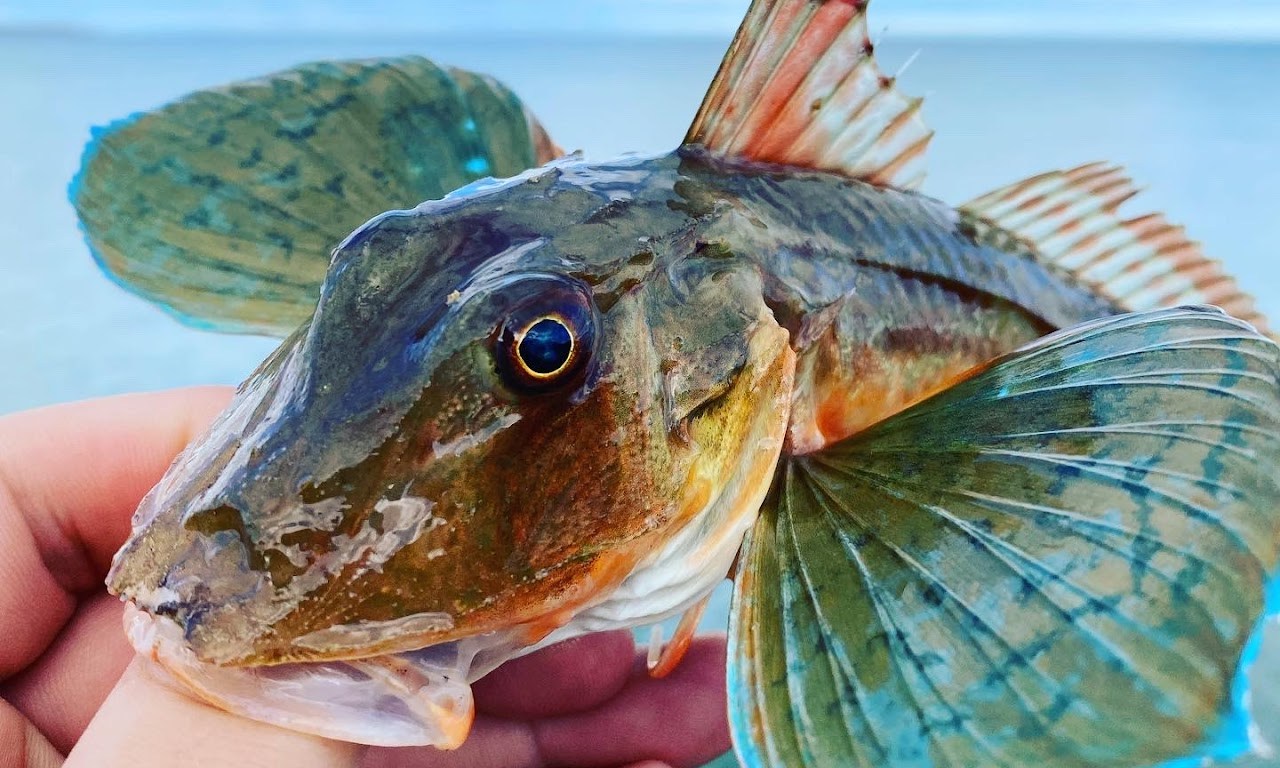
Scientific name Chelidonichthys lucerna, the tub gurnard, is one of the most beautiful, colourful and most unusual looking fish we have here in UK waters, with its deep oranges, reds and browns and, of course, what makes it most distinctive from other gurnard species is that turquoise blue edging to the pectoral fins. Younger tubs lack the blue edge and instead have blue and black spots on the pectoral fins.
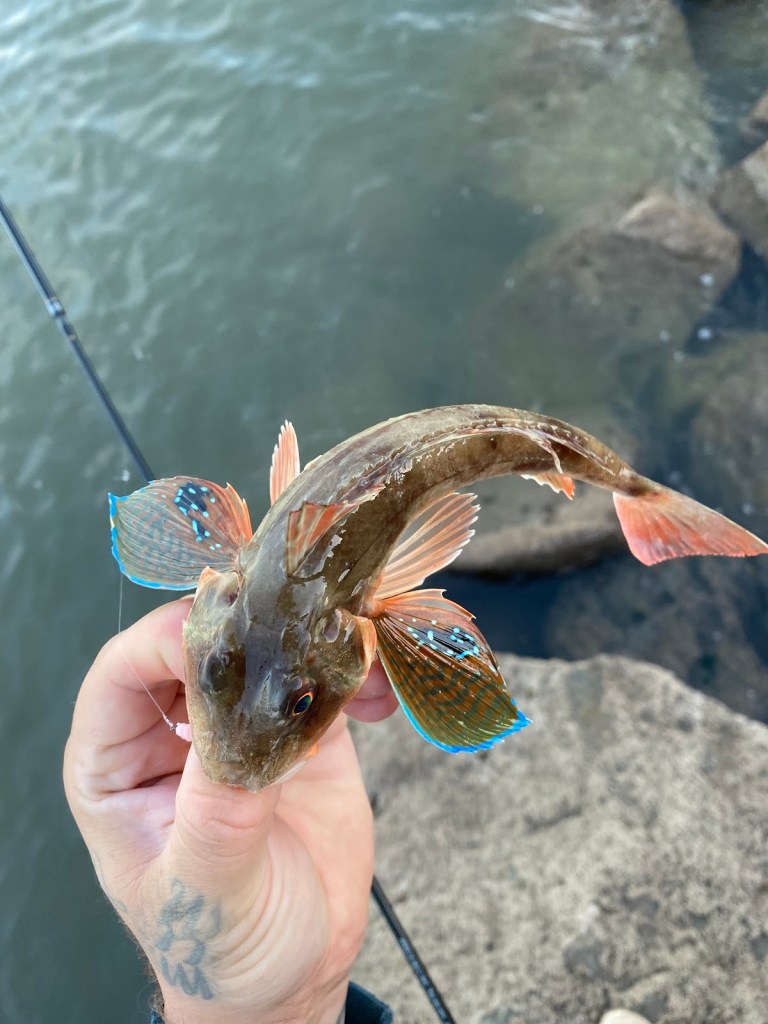
Another strange feature of this fish is how vocal it can be. It uses a special muscle to tap against its swim bladder that causes a grunting sound that it uses to communicate to other tub gurnard and as a defence strategy. It’s a fish I love to show people who don’t know about the extensive fish species we have in our waters and they are always surprised we have such stunning fish available to us.
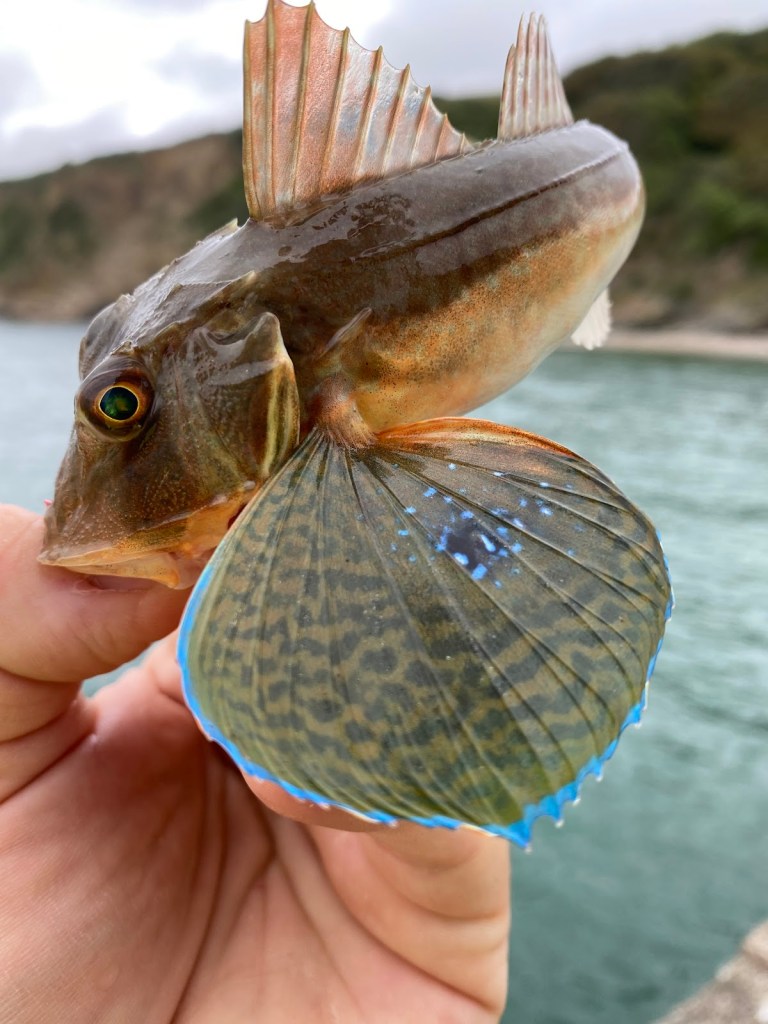
They are the largest of the four species of gurnard we have. This includes the grey gurnard, red gurnard and streaked gurnard. Size wise, we don’t usually get any extremely large fish. 1lb or 2lb is where you usually hit the limit, but these fish do have the potential to become a lot bigger and that would be something to behold coming out from the shore. The current British shore caught record is 12lb 3oz.
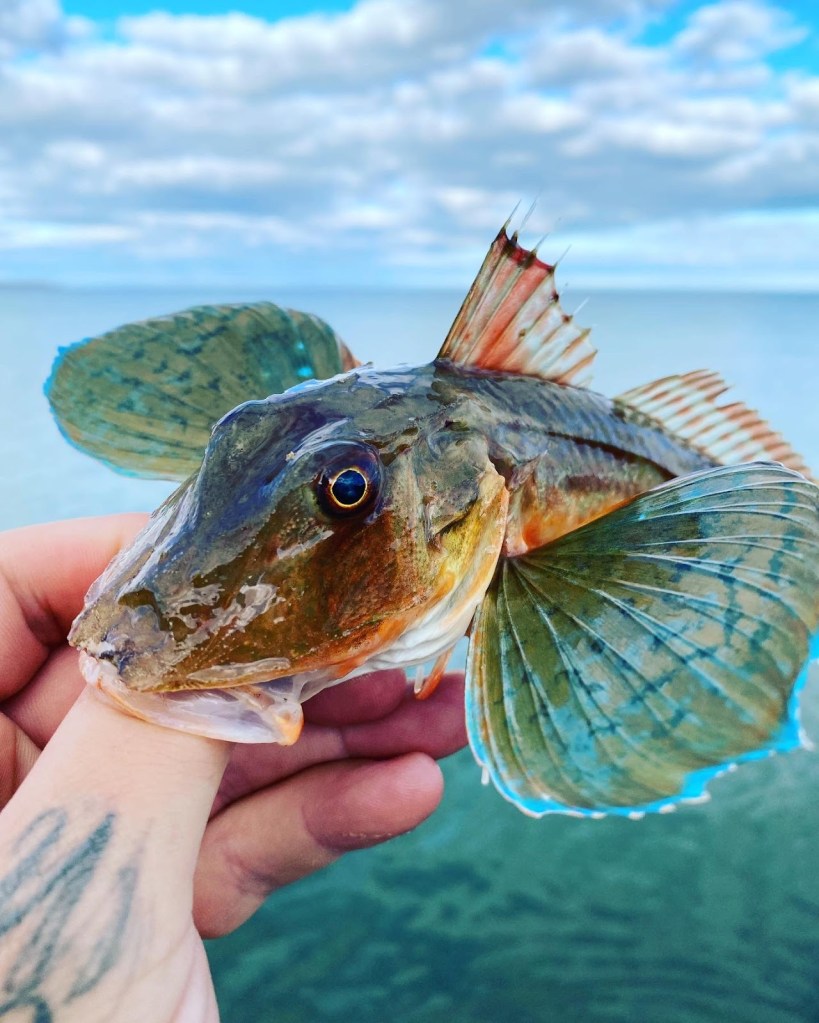
Catching these fish on an LRF setup is the ideal way to test yourself and these fish, from soft plastics to metals, and everything in between. These fish will search them out whilst they crawl around the sea bed on their adapted fins, that are more like strange spindly fingers you would expect a witch to have. When they have locked onto your lure, they will come after it quite aggressively using those large gliding pectoral fins and if you don’t get them on the first hit, you will more than likely get them on the second and, with a combination of head shakes and using those pectoral fins, they can give you a half decent scrap.
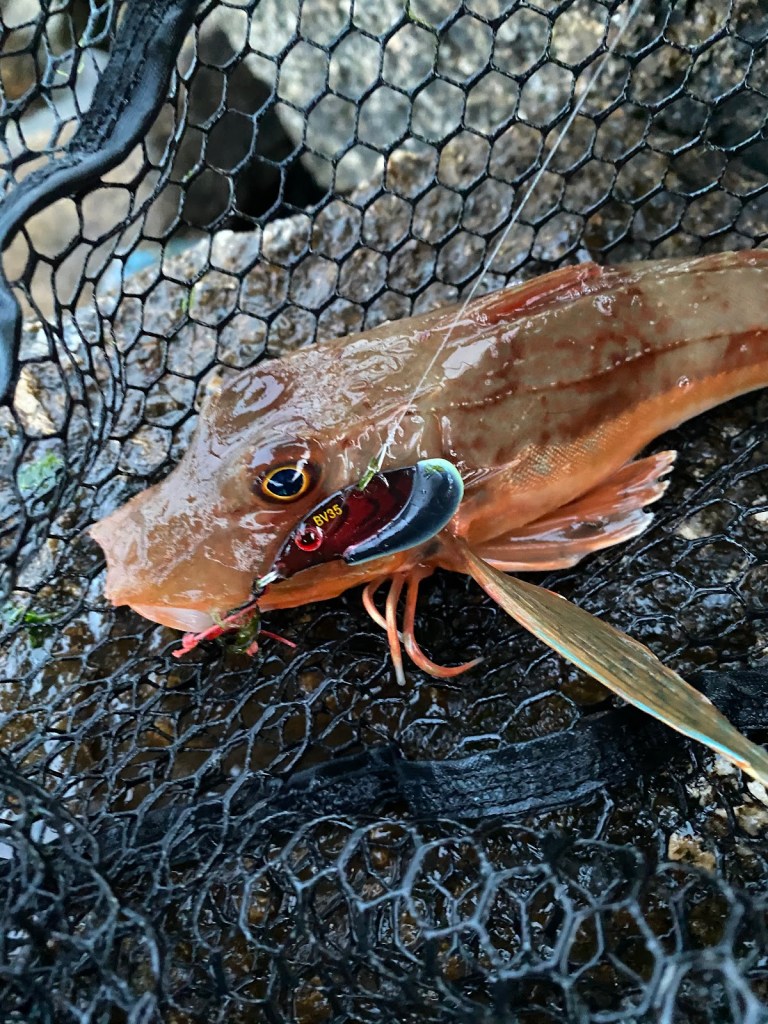
Some care should be taken when handling these fish as they are wrigglers once out of the water and they are also equipped with spikes and serrated armour plating. The head of the gurnard will have a hard bony plate that is razor sharp along its edges and this is accompanied with spikes on top of the head, gill plates and dorsal fin. But don’t be fooled into thinking these fish still aren’t delicate as their body is quite soft, so a firm but gentle grip on the body and a lip grip works best, or if you have an unhooking mat, that is even better.
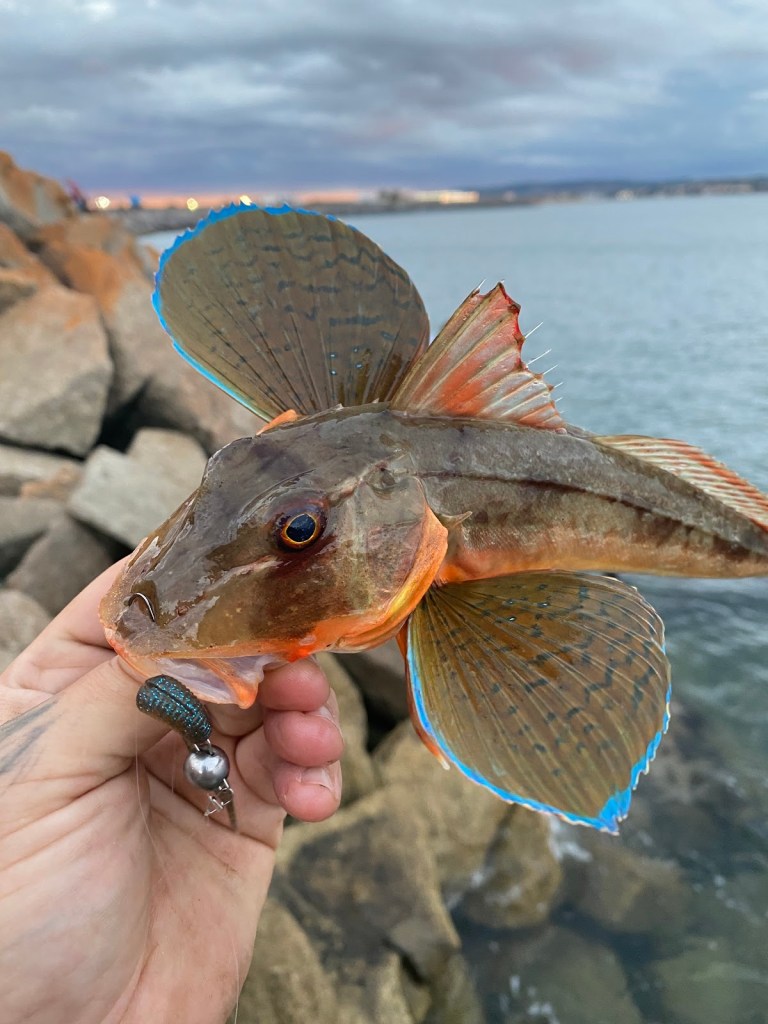
A fish I always associate with summer time, when it comes to that magical time of year from early June onwards, that’s when they start to come closer to shore looking for their meals. They tend to hang around until late autumn and you can occasionally pull them out over the early winter months, but that is more down to luck than it is actually targeting them. The ideal location is open stretches of sandy beaches or lightly mixed ground where they can put those adapted feeler fins to good use digging around in the substrate.
A truly stunning fish that deserves a lot of respect, so if you do decide to go out and target them, make sure you handle them correctly and get some proper photos of them flexing and spreading those glorious blue fringed fins.
 The Big Lerf
Love this! You’ve inspired me to try for one this summer..
LikeLike
Thank you Joe, an informative article in which you highlight the handling skills required by the angler against the fish’s defence mechanisms so that both may come away from the encounter without injury. Your pictures illustrate those spines well! Having never caught one of these fish I have been forewarned…
LikeLike