
By Ben Coleman
Those of you who know me will be well aware that the vast majority of my fishing is done in freshwater. As much as I love saltwater LRF, living in East Yorkshire means that my closest saltwater fishing is an hour away and isn’t exactly comparable to the south west coast, even when it is at its best in late summer / early autumn. I am a multi species angler, solely using lures, and spend a lot of my fishing time tackling small canals, rivers and streams on short sessions targeting a wide variety of species.

I have caught 54 species on lures, 20 of these from freshwater and over the last few years have spent time refining and adapting techniques to help me target specific species. In this article I aim to give you a bit of insight into the tackle and techniques that I use to target freshwater species, many of which are considered to be ‘non-predatory’ (though in reality they are all predators as they pretty much all eat other animals even if they aren’t fish eaters).
It is this understanding that our freshwater species are all predating something, whether it be small worms, larval stages of insects or other freshwater invertebrates that has helped me to hone my ability and gradually catch greater numbers of fish and more reliably target these less focused on species with lures.

Tackle
Firstly, to target most of these species you need to be using the right kind of gear. It is not hugely important what specific rod and reel you use but in my experience the optimum style of setup would be an ultralight rod (I prefer a solid tip for this kind of fishing) rated to no more than 5 grams, a small 1000 sized reel, light braid and leaders and a selection of terminal tackle I will talk through in a moment. For 99% of my fishing I use a Tailwalk AjiST TZ and Shimano Stella 1000 with Sunline Small Game braid, which is a beautiful setup but of course absolutely not necessary to successfully target small freshwater species. If you are going to invest money in one area I would say that the braid is the most important thing to get right, to cast small weights (sometimes as low as 0.2g) you need a light and smooth braid – using anything thick or course will mean that you won’t be able to cast and this will undermine your efforts.

For terminal tackle you don’t need anything complicated. A selection of small hooks (either pre-tied to nylon or just standard coarse hooks for you to tie yourself) down to size 22 or 24, a selection of split shot from SSG to number 8, some light cheb weights and dropshot weights (I use the tungsten chebs from NineSeven Tungsten) and a range of small lures.

Lures
There is a huge array of lures available now and in the right circumstances they will all catch fish, but I have some specific lures that I catch particularly well on and so spend lots of my time using. Crazy Fish make some superb ultralight lures in small sizes (one inch and smaller) and I can’t recommend the ‘Whitebait’ model enough, this small ball tail is an awesome ultralight lure which just about everything will take. In addition, the smallest model of the Polaris, Allure, Tipsy and Nano Minnow are all excellent as well. Of course you will also catch on Isome and Gulp, but I fish standard ‘unscented’ soft plastics for the vast majority of my fishing.

Techniques
This is dependent on what you are trying to catch, but I can split most of the fishing I do into two broad categories, one requires more skill than the other! The first style that I use is fishing very light ‘on the drop’ to sight fish species that are visibly swimming around off of the bottom. Mostly this will be fish such as roach, rudd, sticklebacks, dace, bleak and bream (interestingly!) and with this technique it is vital that the drop is slow and consistent.

Most of the time the most effective method is to cast your lure out, and use the rod and reel to try and maintain a consistent (slow) sink rate. I have found that whilst you will catch some fish by ‘working’ the lure with the rod tip, generally the fish want the lure to move on a consistent line as it sinks, at a slow and steady pace. This is hard to get right and often needs you to play around a bit with the weight you are using to get the right balance between casting weight and sink rate. It is no good being able to cast easily but having a sink rate that is too quick as your lure won’t stay in the right area for long enough and will be rejected. It is also no good having a lovely slow sink rate but not be able to reach the fish.

This is why the braid is so important, as a good quality smooth braid will help you cast more accurately with light weights. If you are struggling to reach the fish and get the slow sink rate try moving the shot further from the hook, so that the lure is able to fall further from the weight. In shallow water this can mean that the lure falls under its own weight after the shot hits the bottom, which is deadly for gudgeon incidentally! AGM Discount Fishing also sell ‘mini rig floats’ that can help you get the lure out the distance you need whilst not dragging it straight to the bottom. I have just bought some of these and will be trying them out this summer when the wind is a pain and making it difficult to present a split shot rig.

The second way I fish is to target fish that are feeding on the bottom – I will use this rig both to sight fish and when fishing ‘blind’ in deeper or murkier water. There are two versions of this approach which most of you will already be familiar with. The first is where I fish a simple cheb rig and then present the lure hard on the bottom either dragging it along the substrate (if targeting fish that are feeding ‘head down, tail up’ such as bream) or by hopping the lure off the bottom to get repeated ‘drops’ (if targeting fish that are more perpendicular to the substrate, such as gudgeon). This works well where the fish you are trying to catch are not overly fussed by the fall rate of the lure, and generally works best where you have actively feeding fish as you are just presenting a potential food item to them. It also works well for fish that you can’t see but that you know are likely to be in the lower layers of the water such as ruffe or bullhead.

The other version of this approach is for when the fish are down on the bottom but are being more cute in their response. In this situation I like some distance between the weight and the hook and so will fish a split shot rig, or will tie a trace to the cheb weight so that the lure can fall the final distance more slowly, this trace may be as short as just 4 or 5 inches but could be as long as a foot or more. This second way of targeting bottom feeders is a great way to get bites when you can see fish but they are not responding to the more bold presentation of the cheb rig.

Specific species – tips
Chub – these fish are easy to catch if you can present the lure right on the first cast, but if you mess that chance up you are unlikely to get another shot – so make that first cast count!
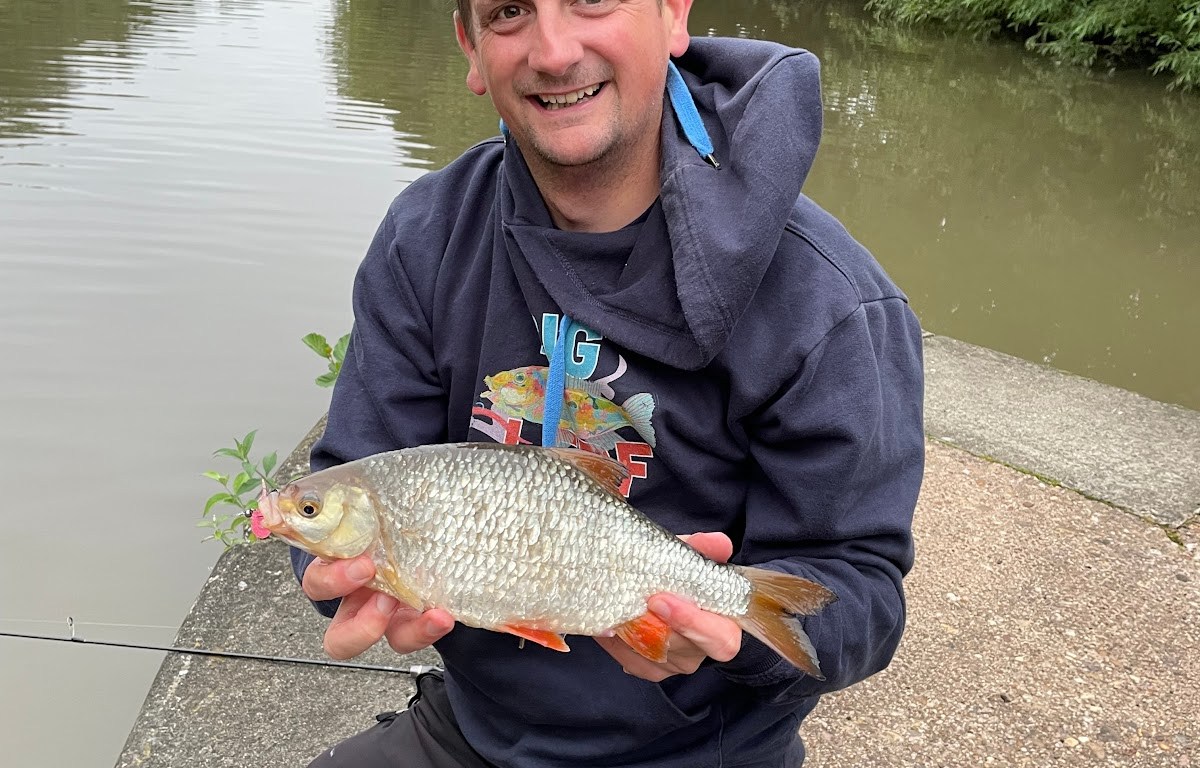
Roach – moody! Roach will chase lures in, but will only take them on a slow drop and with a very small lure. I have caught roach to over two pounds on lures and two of the biggest ones just took lures intended for zander in muddy water on the drop, but most of them follow this pattern and want a neatly presented slow falling lure.

Rudd – a bit like roach but generally more willing to take a lure
Bullhead – this is all about location, when you find them they can be easy to catch – drop your lure in amongst hardcover like boulders, bricks and tiles on the river bed and wait for the bite. This is very much like rockpooling for scorps!
Bream – these can just turn up at anytime and on any lure, but when sight fishing they will happily hit a slowly falling and slowly retrieved lure – grub imitations and small worms work really well.
Sticklebacks – you’ll need tiny hooks here, tanagos are great, and a tiny speck of plastic but they can be really aggressive if they are in a group.
Gudgeon – sight fishing is best here, they like to watch the lure fall for the last 6-8 inches so make sure there is a gap between your lure and weight.


In summary, targeting freshwater species on lures can be really infuriating when you first start out, but is incredibly rewarding when you get it right and can see you catch large numbers of fish and a wide variety of species even in short sessions. I regularly catch seven or more species in a short two hour session by carefully picking my venues and techniques and constantly thinking about how my rig is working while I fish and making slight amendments while I am on the bank. If you are going to give this a go, make sure that you have a valid EA rod licence and that you know if you need a membership or day ticket to fish the venue you have in mind.


 The Big Lerf