
By Ben Bassett
In April 2023 myself and Joe made our way to Bristol Aquarium to interview Nottingham’s very own ‘Fish Twitcher’, Jack Perks.
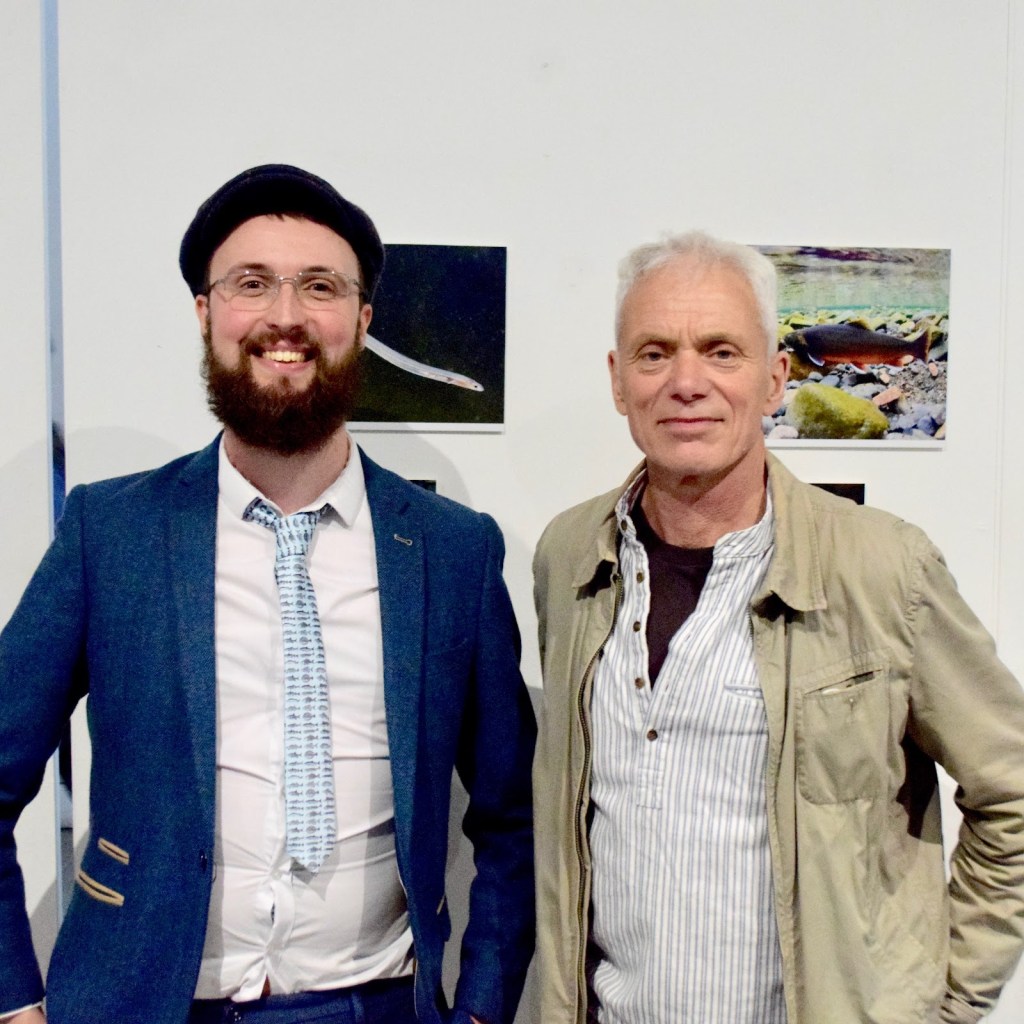
Jack has made a name for himself as a wildlife cameraman, with a real focus on the underwater world. Either behind or in front of the camera, Jack has played a huge role in sharing the beauty of UK fresh and saltwater species on BBC productions such as Springwatch, Countryfile and David Attenborough’s Wild Isles, whilst also being a prolific youtuber and podcaster. Most excitingly of all, Jack has now finished his very own fish documentary, Britain’s Hidden Fishes.
BB – So let’s get into the interview, hello Jack, how are you mate?
JP – I’m alright yeah, it’s not really sunk in yet, it’s only a couple of hours until the film actually plays, then it will all dawn on me.
BB – Let’s start with a brief bit of background on yourself, for those who may not know you.
JP – I’m a wildlife cameraman, photographer and an angler, not professionally, but I dabble. And as well as all wildlife, fish are my main focus, mainly because they get a raw deal, they are often overlooked, whenever you watch these documentaries the fish are just food for something else. There may be a shark or a salmon if you are lucky but a lot of these really interesting fish get left by the side. So I’m quite keen on promoting those through various mediums and that is what I have tried to make a career out of, and God knows how I have done it but I have.
BB – And that’s why we are here, to attend the premiere of Britain’s Hidden Fishes, your very own documentary. Have you done anything like this before?
JP – Not on this scale, I have done the odd bits on YouTube and short films, but this is like a proper documentary. It is like an hour long with a whole team, with Bafta award winning sound design people, other camera ops, we have Jeremy Wade, who I’m very excited to have narrating it, and editors, basically a whole team that would have on a television programme, it’s that level of quality. It’s very exciting.
BB – So how did this come about?
JP – We started in 2020 and as the pandemic was winding down I guess. And I thought if we are gonna do this we better do it now. And I don’t know if you remember this but I rang you up, right at the beginning, saying I’m thinking of ways to make money. And you were really up for it, really friendly and you said maybe we could do an LRF comp. And I know that the LRF community has these amazing comps and have always been really good to me, and we said maybe we could do it in Weymouth… Because you have carried it on haven’t you?
BB – We have
JP – So that was the first one and you said ‘how much money do you want to raise?’ and I said I’m trying to raise thirty grand in a month, and you said ‘f****** hell!’ But we did it, we raised thirty eight grand in the end. That sounds like a lot of money but that is nothing, normally a one hour nature documentary is two million per episode, so this is beyond a shoestring, it’s nothing, but we did it.
BB – Are there any particular bits that you are especially proud of?
JP – I’m happy with all of it, I guess the thing that would be relevant to LRF’ers is we have got a giant goby sequence, and I really wanted giant gobies (in the film). I used to live in Falmouth and I remember occasionally seeing the rockpooling and I thought I have got to shout about these things. LRF anglers get very excited when they accidentally catch one. So I had to apply for a licence with Natural England, because they are protected. They let me use shrimp pots, and we got loads. In the end we didn’t even need to trap them, you just sit in a rockpool and they come out and look at you. I’m pretty pleased with that sequence and we have got a few rockpool critters in the film.
BB – How did you get River Monster’s Jeremy Wade to narrate it?
JP – I knew Jeremy, sort of, because we went fishing together with a guy called Mark Everard. Mark put together this mini fish match and the idea was whio can catch the most mini species, so in the spirit of LRF really. Jeremy didn’t have any gear under 80lbs so we had to lend him lighter gear! And we got on well, and when I was planning this film, he was my only choice, and luckily he was so gung-ho, really keen to do it. So I’m pretty lucky.
BB – Who else has been involved in creating the film?
JP – We had lots of other camera ops’, we had people who have worked on Frozen Planet, and Planet Earth, Jake Davis, he has some amazing marine footage, angel shark footage and crazy stuff like that. Matt Doggett did the incredible black sea bream footage. So we had the creme de le creme. The top fishy people.
BB – People will want to know where they can see this? You are putting this on tour right?
JP – Yeah so we have got some screenings, I will post those out, I know a lot of the LRF community are in the south-west, we have got one in Falmouth in the Poly, which I think is on the 24th October but don’t quote me on that. We’ve definitely got a couple in the south-west and all around the country. Potentially, I’m talking to someone about getting it on TV, I haven’t got any dates yet. With a bit of luck it will go on the telly and everyone can watch it anywhere.
BB- We talked about how The Big Lerf actually owes one of our events to you, as you gave us the reason to create the very first Fundraiser to raise money for the documentary, I think we raised £1600, something like that.
JP – Yeah I had a whale of a time, I really enjoyed it. It was a difficult day, I don’t think anyone caught anything spectacular …
BB – Maurice got the red mullet that one coolest catch and there was a nice tub gurnard that won longest fish.
JP – Ah yeah I remember that now.
BB – Are there any particular favourite marine species for yourself?
JP – I would love to see a pogge (or hooknose), they are really weird aren’t they? One of those is on my bucket list this year, just to see, not bothered about catching it. And sea snails, they are not necessarily the most beautiful fish but they are weird. Butterfly blenny too.
BB – Going back to the Fundraiser, I’m interested in why you chose the crowdfunding model?
JP – Well I knocked on the doors of the BBC, people like that, and they didn’t want to give it the lump sum, so crowdfunding was handy, because some people literally just give a quid or two and it was all appreciated. It was nice that I didn’t have to rely on just one person, people could just give what they could afford. If you have got a more obscure project like this was, crowdfunding is a good model for that.
BB – Back to fishing, what would be the type you do the most?
JP – I’m an all rounder so, I live in the middle of the midlands, so I’m as far away from the sea as possible, so I do love it when I get a chance (to fish in the sea). I generally do trotting, because I live on the Trent, for gudgeon, barbel, whatever comes up. But if I do get a chance to fish by the sea, then I do enjoy the up against the arbour wall, probably with a cheeky piece of rag. I know that is blasphemy to say on an LRF podcast! We do get good zander where I live, my PB is 11lb, that’s deadbaiting. I do some predator fishing in the winter.
BB – Do you have any thoughts on the zander?
JP – It would be better if they weren’t here, but they are here and it would cost a hell of a lot to get rid of them, and the co-exist with all the same species in Europe we have here, so I wouldn’t worry about it. Catfish I’m not such a big fan of, big wels catfish in rivers, no thank you.
BB – You have your own podcast, The Beared Tit’s Podcast, so I appreciate you taking the time to feature on ours. How does recording audio compare to filming?
JP – I hate it! Not that I really hate it but I’m a visual person. It’s lovely to get to chat to different people, there is the social aspect that is great. But I don’t like editing.
BB – You are pretty well known for filming every single UK species of fish, how did that start?
JP – Because no one else had done it. You have got bird twitchers that go and see all the birds, and those that see all of the moths and weird stuff, and I thought, I wonder if anyone has seen all of the freshwater fish? I thought I would film them all, thinking it wouldn’t take long, it took seven years! No one paid me to do it, I loved it.
BB – What was the most difficult to film?
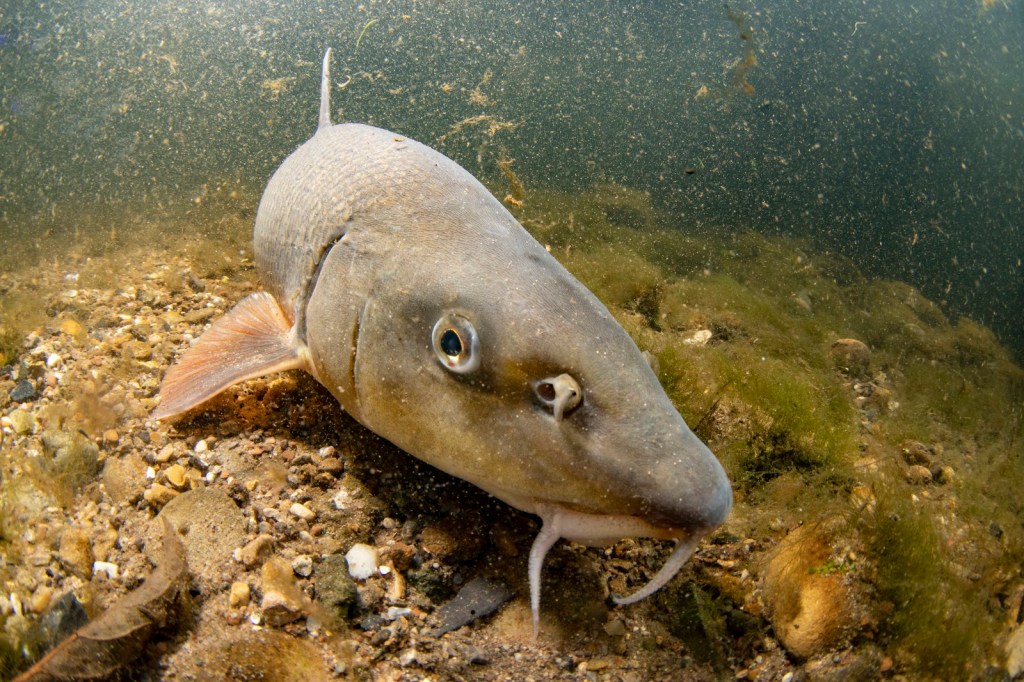
JP – Everyone always expects it to be the rare stuff but the common stuff was difficult, the barbel. Even though I have got barbel coming out the wazoo near me, filming them was tricky. Things like char and shad, they were pretty straightforward, because they’re rare people notice them. But if you say where’s a river that is gin clear with lots of barbel and looks good? It’s hard to find. Big eels were tricky, zander were hard, so a lot of the more common stuff was actually the hardest.
BB – Finally any plans for Britains Hidden Fishes 2?
JP – Haha! If someone wants to give me another £38,000 I would love to! Who knows? It might lead to something else. Someone said when is the first episode out? And I said it’s a just the one episode! I would love to do more, there’s so many stories that we didn’t feature because we didn’t have time or money. Never say never but there no immediate plans. We’ll have to dso a few more fishing comps to raise the money for it!
BB – It would be a popular choice, we will finish up there. Thanks Jack.
JP – Thanks from me guys, I enjoyed it.