

By Ben Bassett
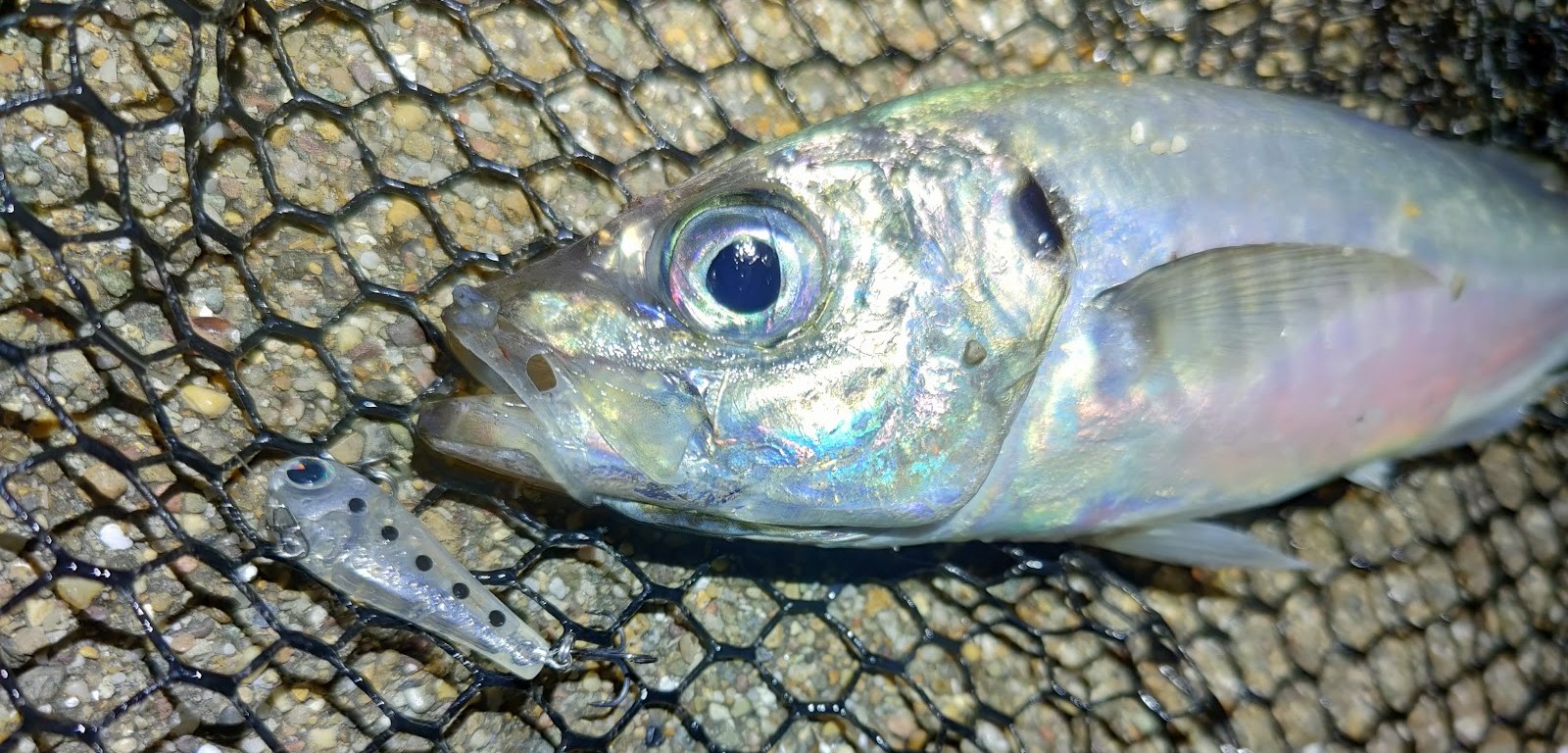
Trachuras trachuras, the horse mackerel, or more commonly known as scad in the UK. In LRF circles we also know it as ‘aji’, which is the Japanese name for the species and many rods imported from the country bear the aji name.

The species is a member of the jack family, so it is related to the much larger and more famous travallies, including the giant trevally (GT). But scad tend to be caught in UK waters under a pound in weight, with the occasional giant specimen nearing 3lb turning up in catches, usually from boats fishing in deeper water. They are a silver/green coloured fish with a dark spot just behind the gill cover. They have two dorsal fins, the first is shorter with long, thin spines, the second is longer, with shorter spines. The most distinctive trait is the lateral line, which is lined with adapted scales that have formed armoured scutes, which are especially pronounced near the tail.

They have large eyes and mouth, with the mouth being able to open wide to engulf their prey. Despite the size of the mouth, the skin around it is surprisingly delicate and the majority of missed bites are usually because the hook cannot hold in the thin skin on the sides of the scad’s mouth.

In the UK they are most common on the south and west coasts but are found around the entire country, and even travel as far north as Norway in the summer. They spawn in early spring in the south, then make their way north in the warmer months. This means they are a rare catch in winter, although not impossible, especially in deeper water. Personally, my most prolific months for them in the south-west of England are August-November.

These are a fish evolved for hunting in low light, and it is rare to catch them in shallow water during the day. If they are caught in daylight it is usually in deeper water hunting below the shoals of mackerel. But as the sun begins to set the fish will hunt close inshore, bringing them into perfect range for Lerfers.

Edgar Pereira wrote an excellent guide on how to fish ‘aji-style’ in Issue 4, so I recommend reading that. But in general, small soft plastics (often labelled as aji lures) on very light jigheads are the most effective way to catch them, although small metals also work very well. Occasionally you will come across a huge shoal of them and literally anything will work, but the majority of the time, the lighter you can fish effectively, the more successful you will be.
Scad can be caught from beaches, harbours and piers. In urban areas they often hunt in the shadows created by bright streetlights. These marks can be very productive and a great first step into targeting this species. But don’t neglect the truly dark spots too, as these fish have superb eyesight and can find your lure in the dark with ease.

Scad go back well as long as you treat them with care. They are known as a fine eating fish in Japan and the Med, but are not commonly consumed by British anglers. You can use Japanese style fish grips to handle them, gloves or wet bare skin, just try to avoid grazing your hand on their tail scutes.
Target them once we get into the most produtive months of the year – August -January, you may find yourself impressed by the powerful and underrated scad.
 The Big Lerf