

By Rich Salter
The tompot blenny is a species most lerfers will be familiar with, although it doesn’t feature in catches in the far north of the UK, which is difficult for us southerners to imagine!
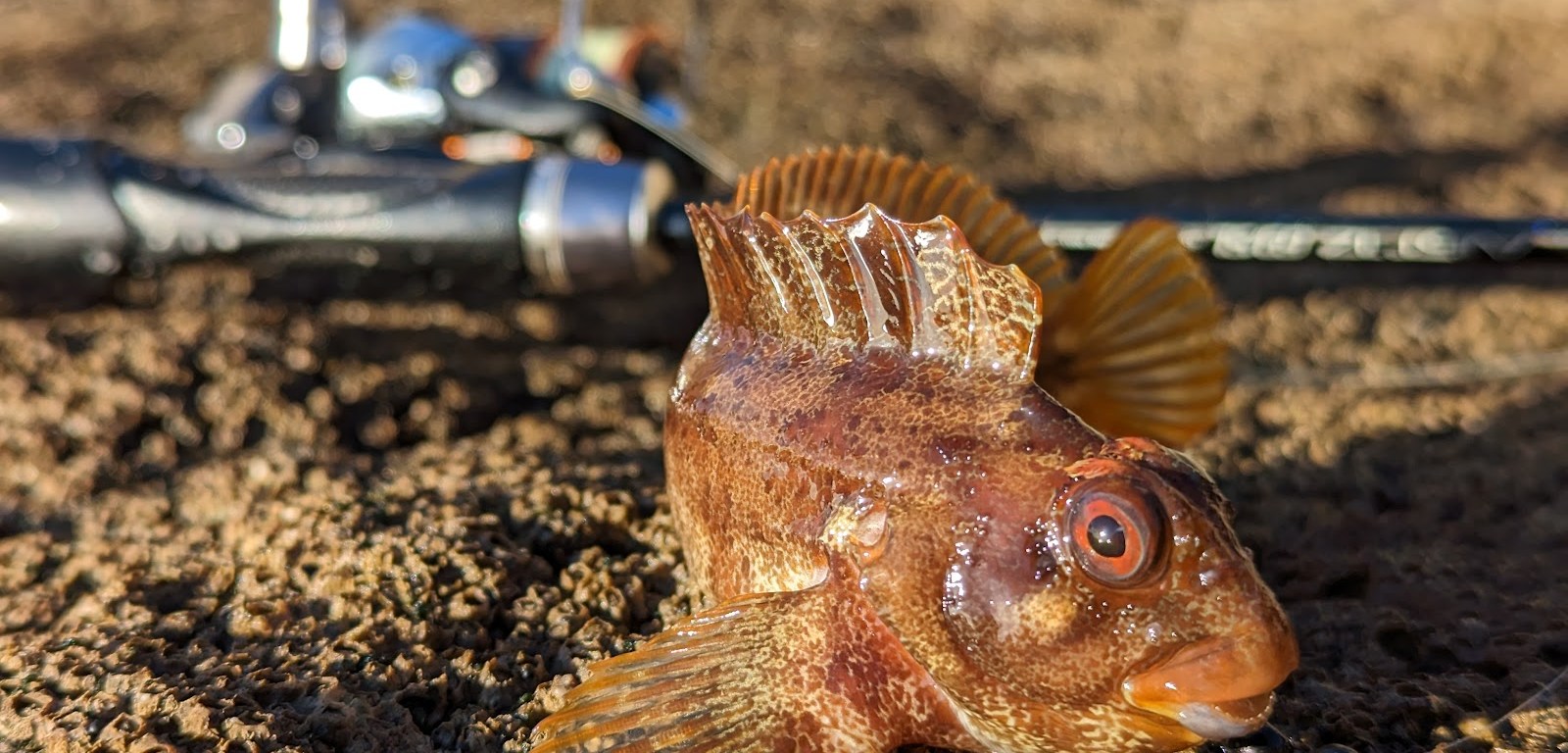
Tompots are the largest of the British blenny species. To those that aren’t familiar, they are generally brown in colour, with mottled markings and dark vertical bars running along their body and often have an attractive orange tinge to their fins and lips. They also have two distinctive branched tentacles on their head that look a bit like antlers.
Tompots like structure, so are often found along harbour walls or down in the dark holes between rocks and boulders, tending to feature in catches alongside wrasse and other rock dwelling species. I’ve often found that I catch tompots and goldsinny wrasse from the same spot quite frequently, although I’m not sure what the connection is! Smaller tompots can be caught in rockpools but rarely in numbers, unlike their smaller cousins, the common blenny.
Tompots are territorial and will tend to hang around in the same spot, so repeat catches are not unusual. Divers have reported how full of character tompots are after getting to know individual fish by revisiting the same spot, and most lerfers would agree. Tompots are feisty mini species with a decent set of teeth on them, which can become attached to fingers if you let them get too close, thankfully the bite isn’t too painful and they don’t generally hang on for too long!
When it comes to attacking a lure, a tompot bite is often very recognisable. A repeated thump on the rod tip, a little less sharp than that from a wrasse will usually be the sign that a tompot is interested in your offering! Tompots can make good use of their territory and will try to pull whatever they are attacking into their snaggy lair, which can result in repeated frustration for us lerfers! A hooked tompot fights surprisingly well for their size, it’s definitely not a fish you want to target using a tanago hook or with ester line given the type of ground you’re likely to encounter these dirty fighters in!
In terms of targeting tompots, as mentioned above, they can be found quite reliably along harbour walls and in sheltered rocky and weedy areas. Tompots can be caught at any time, but they become particularly active around dusk, so fishing the last couple of hours before dark can be a particularly productive time to target them.
Tompots don’t have a huge mouth, so a hook size around a 12 to 16 on a dropshot or split shot rig would probably be most effective and practical. A worm or small crustacean imitation will likely be the most tempting lure for a tompot, they can be tricky to catch on unscented lures but it is doable. Scented offerings like isome and gulp are usually readily accepted though, I’ve found gulp sandworm in camo to be particularly effective when targeting tompots. Your lure will need to be presented on or near the bottom, as this is where tompots hang out. Slow, subtle movement is best as they are more ambushers than chasers, although they can cover a bit of ground to hit a lure if they’re in the mood!
With their aggressive nature, funky eyebrows and feisty character, the tompot is well deserving of its place as a popular LRF target.

 The Big Lerf